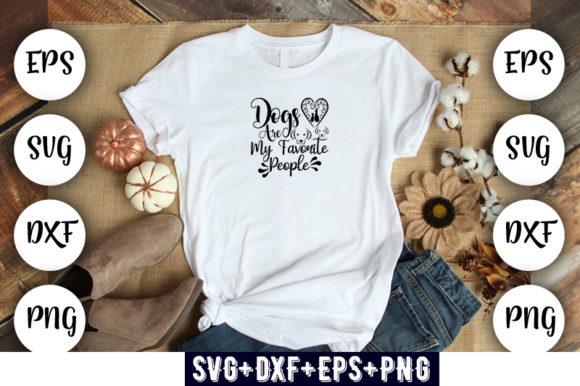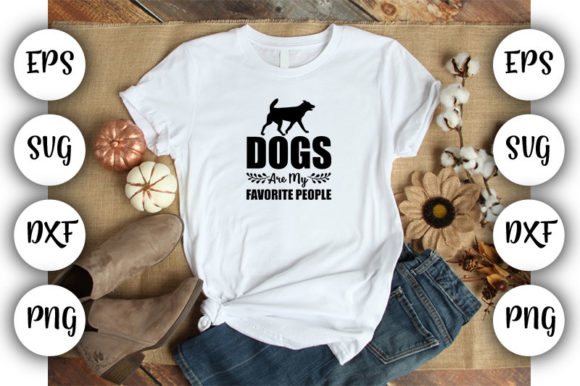
Dog Dogs Are My Favorite People
As someone who’s stitched hundreds of designs across apparel, home goods, and personalized gifts—from boutique baby onesies to Etsy shop sweatshirt collections—I opened Dog Dogs Are My Favorite People expecting warmth, charm, and quiet confidence. What I got was exactly that: a clean, heartfelt graphic with strong visual rhythm and an unmistakable handmade soul. It doesn’t shout. It smiles—and invites the viewer in.
I tested it first on a medium-weight cotton canvas tote for a local dog rescue’s holiday fundraiser. The design sat comfortably centered on the front panel, sized at 4.2 inches wide—just right for visibility without overwhelming the fabric. Its layout is horizontal, balanced, and gently asymmetrical: the phrase flows left to right like a quiet confession, with “Dogs” slightly emphasized—not by bolding, but by thoughtful spacing and subtle weight distribution in the letterforms. There’s no clipart energy here. This feels hand-drawn, then digitized with care.
That matters—especially when you’re building trust with customers. A buyer scrolling through your Etsy shop or browsing your small shop’s holiday display isn’t just buying embroidery; they’re buying intention. Dog Dogs Are My Favorite People reads as sincere, not gimmicky. It fits naturally on baby onesies (paired with soft pastel thread), kitchen towels (where its legibility holds up even after repeated washing), and unisex crewneck sweatshirts (where its modest height avoids swallowing the neckline). It also translates beautifully into an embroidered patch—clean edges, minimal internal detail, and generous negative space mean it won’t pucker or distort during iron-on or sew-on application.
But let’s talk realism: this isn’t a high-detail monogram or a dense floral motif. It’s a graphic, designed first for clarity and second for decoration. That makes it ideal for custom apparel where speed, consistency, and readability matter—think craft fair tees, pop-up market tote bags, or personalized gifts for dog lovers who appreciate simplicity over spectacle. As a machine embroidery design, it leans into satin stitch for letter outlines and smooth fill stitch for interior areas—no excessive running stitch clutter, no tiny flourishes that vanish under thread. That’s smart. It means fewer thread breaks, less trimming, and faster turnaround for your craft business.
Where it shines most? On stable, medium-to-heavy fabrics: canvas, twill, midweight cotton knits, and brushed fleece. I ran it on a textured linen tea towel—minimal stabilizer, standard tear-away—and the text remained crisp. On thin jersey or stretchy performance fabric? Proceed with caution. You’ll need cut-away stabilizer and possibly reduced stitch density to avoid shadowing or distortion. Same goes for curved surfaces: caps or beanies require careful hooping and likely slight scaling down to keep proportions intact. Don’t force it onto a 3-inch hoop unless you’ve confirmed the smallest version fits cleanly—check your SVG or EPS preview before loading.
Color contrast is non-negotiable here. Because the design relies on shape and spacing—not heavy outlines or drop shadows—it needs deliberate thread color choices. On dark fabric, go with bright white, buttercream, or warm gray rather than off-white. On light fabric, navy, charcoal, or deep forest green adds sophistication without shouting. Avoid yellow-on-cream or light pink-on-ivory unless you’re aiming for subtlety (and have confirmed visibility in your mockups). Always test on scrap first—not just for stitching, but for how it reads at arm’s length. Is it legible while walking past a market booth? Does it hold up in natural light on a nursery shelf?
One thing I appreciated: its adaptability across use cases. As a digital embroidery file, it’s equally useful for a solo hobbyist embroidering a pillow cover for her sister’s new puppy as it is for a small shop owner prepping 50 embroidered aprons for a local bakery’s staff gift set. It doesn’t scream “commercial,” yet it scales professionally—especially when paired with consistent branding (e.g., matching packaging, simple tags, cohesive social mockups). For Etsy sellers, it’s a strong candidate for bundled listings: “Dog Lover Bundle” with coordinating paw prints or bone motifs—just ensure licensing allows derivative or combo use before publishing.
It’s also refreshingly low-maintenance for digital product sellers. Since it’s delivered in SVG, DXF, EPS, and PNG, you can easily generate printable mockups, add it to Canva templates for shop banners, or prep vector-based listings without conversion headaches. Just remember: PNG is for previews only—not for embroidery machines. Use SVG or EPS for cutting, DXF for CNC or vinyl, and always verify stitch integrity in your embroidery software before sending to the hoop.
Where to pause and plan: tiny corners (like the tail end of the “s” in “Dogs”) may need slight manual cleanup in your embroidery editor if you’re pushing size limits. And while it works beautifully on baby embroidery projects, avoid ultra-fine thread or micro-hooping on newborn onesies—stick to 4.5+ inch sizing and soft poly-cotton blends for safety and clarity. Also, double-check licensing terms before selling the digital file itself—this is a graphics file, not necessarily a commercial-use license out of the box.
Ultimately, Dog Dogs Are My Favorite People earns its place because it balances emotional resonance with technical practicality. It’s not trying to be everything—it’s trying to be *enough*: enough charm for a holiday gift, enough clarity for a boutique product, enough versatility for both personal and small-batch commercial embroidery. It doesn’t distract from the wearer or the item; it enhances them. And in a saturated market of dog-themed designs, that quiet confidence is rare—and valuable.
Before you stitch it:
- Test on scrap fabric—same type and weight as your final project
- Check thread color contrast on both light and dark backgrounds
- Review stitch density in your software—adjust if needed for fabric texture
- Confirm hoop size compatibility, especially for caps or small items
- Inspect fine details at actual size—zoom in on corners and curves
- Use appropriate stabilizer: tear-away for stable fabrics, cut-away for stretch or knit
- Try black-and-white mockups to assess value contrast and legibility
- Verify licensing terms before selling finished products or digital bundles
This isn’t just another T-Shirt Designs download. It’s a thoughtful, ready-to-stitch piece of storytelling—one that fits seamlessly into real embroidery projects, real customer expectations, and real small business workflows.