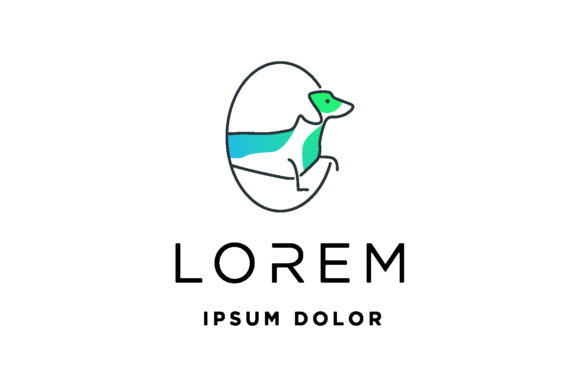
Dog Logo Template Vector Illustration
First Impressions: Friendly, Clean, and Ready for Stitching
When I opened the Dog Logo Template Vector Illustration, my first thought wasn’t “cute”—it was “usable.” The silhouette has gentle curves, balanced negative space, and just enough character to feel warm without tipping into cartoonish clutter. It’s not overly detailed—no tiny whiskers or layered fur textures—and that’s a relief. As an embroidery designer who’s stitched hundreds of pet-themed logos, I know this kind of restraint is golden: it translates cleanly to satin stitch on a tote bag, holds up in fill stitch on a baby onesie, and stays legible even at 2.5 inches tall on a cap front.
A Real Project Test: Embroidering a Boutique Tote Bag
Last week, I prepped this design for a small-batch order of linen-cotton blend tote bags for a local pet boutique. No digital mockup shortcuts—I printed the vector, traced it onto stabilizer, and ran a test stitch on scrap fabric first. The clean vector paths meant easy resizing in my embroidery software. No jagged edges, no lost anchor points when scaling down to 3.25 inches wide. That matters—because once you’re stitching on textured fabric like canvas or slubbed linen, any vector artifact becomes a stitch-density nightmare.
Where It Shines (and Where to Pause)
The Dog Logo Template Vector Illustration works especially well for:
- Custom apparel: Sweatshirt embroidery stays crisp thanks to its open shape—no dense interior fills that bunch or pucker on fleece.
- Embroidered patches: The outline is strong enough to hold its shape after cutting and heat-sealing; no delicate inner lines to fray.
- Baby embroidery: Soft curves read as gentle and safe—not too bold, not too busy—perfect for onesies or burp cloths.
- Holiday embroidery: Paired with simple red or forest green thread, it reads instantly as cheerful and seasonal without needing snowflakes or bows.
- Etsy listings & printable mockups: Because it’s delivered as full-vector SVG and EPS, I dropped it straight into Canva and Illustrator to build realistic product previews—no pixelation, no redraws.
But here’s where I slow down:
- Small hoop sizes: If your machine maxes out at a 4” x 4” hoop, avoid shrinking the design below 2 inches wide—the subtle curve of the dog’s ear may lose definition in satin stitch.
- Stretchy fabric: On knits or ribbed tees, use cutaway + tear-away stabilizer combo. The logo’s smooth perimeter needs support—not slippage—especially during the final satin border.
- Dark fabric: Test thread contrast early. Light tan or cream thread can disappear on charcoal or navy unless you add a white underlay. Don’t assume “high resolution” means automatic visibility.
- Curved surfaces: Caps and beanies demand careful placement. This logo’s horizontal balance helps—but always mirror-test the layout before hooping.
What It Adds to Your Finished Product
This isn’t just a graphic—it’s a quiet value booster. When customers see the Dog Logo Template Vector Illustration stitched on a kitchen towel or pillow cover, they don’t think “clip art.” They sense intention: clean lines, thoughtful spacing, handmade polish. That builds trust. For Etsy sellers, that perception lifts perceived value—especially next to busier, lower-res alternatives. For craft fair vendors, it helps your booth feel cohesive: same logo across embroidered aprons, pet bandanas, and greeting cards (thanks to the included vector files).
It also supports brand consistency without locking you in. Since it’s “ready to change text,” I swapped the placeholder wordmark for a shop name in under two minutes—no font matching stress, no kerning guesswork. That flexibility matters whether you’re branding a new dog-walking service or personalizing a wedding gift for a couple with a beloved terrier.
Practical Designer Notes Before You Stitch
Before committing to your first run, do these five things:
- Test on scrap fabric—same type and weight as your final product. Linen behaves differently than cotton poplin; sweatshirt fleece hides detail faster than twill.
- Check thread color contrast in natural light *and* under store lighting. A gold thread that pops on screen might vanish on oatmeal canvas.
- Review stitch density in your embroidery software. If the fill areas look unusually heavy or sparse, adjust density manually—vector clarity doesn’t guarantee optimal stitch logic.
- Confirm hoop size compatibility. If you’re using a 5” x 7” hoop but plan to stitch at 4.5” wide, leave at least ⅛” margin all around—especially near curved edges.
- Verify licensing before selling finished items or digital products. The listing says “Ready to Change Text” and includes EPS/SVG—but check whether commercial use is permitted for physical goods, digital resale, or POD platforms.
Final Thought: A Workhorse, Not a Gimmick
The Dog Logo Template Vector Illustration won’t wow with flash—but it earns respect through reliability. It stitches cleanly on baby blankets and holds up on café aprons after 30+ washes. It scales gracefully from a 1.75” patch to a 6” tote centerpiece. And because it’s built as true vector—not traced raster—it stays sharp whether you’re prepping a printable mockup for Instagram or digitizing for commercial embroidery.
If you sell handmade products, run a craft business, or embroider for clients, this isn’t just another logo file. It’s a quietly capable design asset—one that saves time, reduces rework, and makes your finished product feel intentionally made, not hastily assembled.