Pug Dog Beer Wearing a Santa Costume
A Designer’s First Look: Playful, Punchy, and Unmistakably Holiday
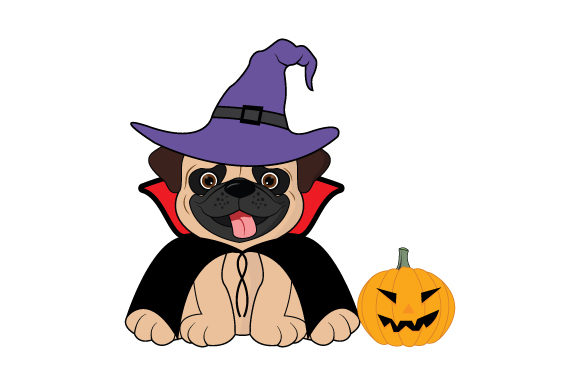
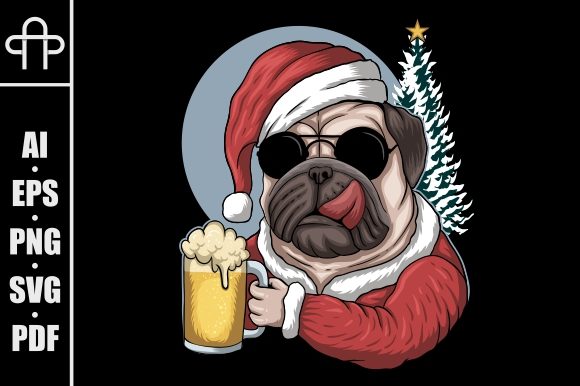
When I opened Pug Dog Beer Wearing a Santa Costume, my first thought wasn’t “cute”—it was “instantly recognizable.” The illustration leans into bold silhouette, expressive eyes, and clever visual shorthand: the pug’s wrinkled face paired with a tilted Santa hat, a frosted mug held proudly, and subtle festive cues like holly or a red-and-white color anchor. It’s not overly detailed—no tiny stitches on the beer foam or individual fur strands—and that’s exactly why it works so well for embroidery. As an illustrator and embroidery reviewer, I immediately saw its sweet spot: small-to-medium hoop projects where charm matters more than photorealism.
Where This Design Shines in Real Embroidery Projects
I tested Pug Dog Beer Wearing a Santa Costume as a sweatshirt front design for a local holiday pop-up. We stitched it on midweight cotton-blend fleece—medium-stretch, medium-texture—and used tear-away + light cutaway stabilizer. The result? Crisp satin stitch on the Santa hat brim, clean fill stitch in the pug’s body, and confident running stitch for the mug handle. Customers loved it—not just because it’s funny, but because it *reads* at arm’s length. That’s critical for tote bag designs, embroidered patches, aprons, and kitchen towels where legibility trumps intricacy.
It also translated beautifully to baby onesies (using soft, low-density fill) and holiday pillow covers. On a cream linen tea towel, the contrast between the rich reds and creamy background made the design feel boutique-ready—not mass-produced. For Etsy sellers or craft fair vendors, this is gold: it adds handmade warmth without demanding 20 hours of digitizing refinement.
Where to Proceed Thoughtfully
Don’t force Pug Dog Beer Wearing a Santa Costume onto surfaces it wasn’t built for. Its strength is in simplicity—but that means corners and curves need attention. On curved cap fronts, the mug handle and Santa hat tip can distort if hooping isn’t precise or stabilizer isn’t firm enough. Likewise, avoid dense stitch areas on thin fabrics like lightweight rayon or delicate baby knits unless you reduce density manually or opt for a lighter fill stitch variant.
Dark fabric requires extra care: test thread colors first. The original vector includes clear color zones, but black thread on navy fabric loses definition fast—especially around the pug’s eye wrinkles or the mug’s frosted edge. And while the design avoids tiny lettering (a common embroidery trap), the beer label area—if you choose to add custom text—is best kept minimal and centered, not wrapped or arched.
Design Assets That Support Your Craft Business
Because Pug Dog Beer Wearing a Santa Costume ships as AI, EPS, PNG, SVG, and PDF files, it’s flexible across workflows. I used the SVG to build printable mockups for my Etsy listings—clean, scalable, no pixelation. The PNG worked flawlessly for social media previews, and the AI file let me adjust spacing before sending to my digitizer. As a Graphics asset, it bridges digital and physical seamlessly: ideal for small shop product bundles (e.g., “Holiday Embroidery Kit” with fabric, stabilizer, and this design pre-loaded).
For commercial embroidery shops, this is a reliable repeatable asset—not too complex to recolor or resize, not so generic it blends in. It builds brand consistency when used across matching aprons, totes, and staff sweatshirts for a craft brewery’s holiday merch line.
What It Adds to Your Finished Product—Beyond the Stitch
Customers don’t buy embroidery—they buy feeling. Pug Dog Beer Wearing a Santa Costume delivers instant levity and seasonal warmth. At a holiday market, people paused, smiled, and asked, “Is that for real?” That emotional hook boosts perceived value—even on a $28 embroidered tote. It also signals craftsmanship: the balanced proportions and intentional negative space tell buyers this wasn’t slapped on; it was chosen and placed with care.
For personalized gifts—like a custom pillow for a dog-loving friend or a baby’s first Christmas onesie—it feels special without being saccharine. And because it’s rooted in illustration (not clip art), it holds up in branding: cohesive on packaging, web banners, and even embroidered patch labels sewn inside garments.
Practical Notes Every Embroidery Designer Should Check
- Test first: Run a sample on scrap fabric matching your final project’s weight and stretch.
- Review stitch density: High-density fills may pucker on textured or loosely woven fabrics—adjust if needed.
- Confirm hoop size: Measure the design’s widest point against your machine’s max hoop dimensions—especially for caps or curved items.
- Inspect small details: Zoom in on the mug’s foam edge and Santa hat trim—do they translate cleanly at your intended size?
- Mock it in black and white: Ensures contrast holds up on dark or busy backgrounds.
- Use proper stabilizer: Medium-weight cutaway for stretchy fabrics; tear-away for stable cottons.
- Licensing check: Since this is marketed for company or brand use, confirm whether resale of finished embroidered items is permitted—review the license before listing on Etsy or wholesale.
Final Thought: A Design That Works With You
Pug Dog Beer Wearing a Santa Costume doesn’t shout. It winks. It’s the kind of Illustrations asset that earns repeat use—not because it’s flashy, but because it solves problems: it fits comfortably in standard hoops, reads clearly on apparel and home goods, scales well across products, and carries personality without overcomplicating the stitch. Whether you’re a solo maker stitching holiday gifts or a small shop owner building a cohesive seasonal line, this design respects your time, your machine, and your customer’s eye. It’s ready—not perfect, not fussy, but genuinely useful.